

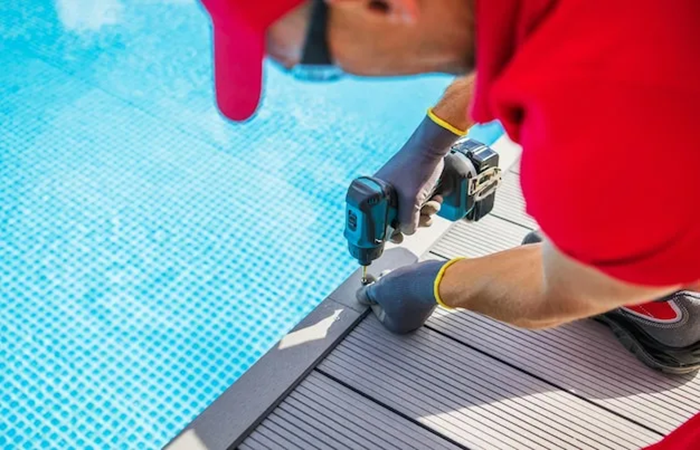
Pool surface polishing is a complex process that improves the appearance of the pool, removes roughness, reduces the risk of injury, and facilitates subsequent maintenance.
Properly performed polishing by aqualand-pools.com/ helps level the surface for finishing, remove scale and localized defects, and extend the life of the materials.
The polishing technology depends on the type of pool and its coating: concrete, plaster, mosaic, tile, composite, polymer layers, or painted surfaces require different abrasives, tools, and settings. Mistakes at this stage often lead to delamination, cracking, accelerated wear, and increased chemical consumption.
When is polishing necessary and what does it solve?
Sanding is used both during construction/repairs and when restoring the pool after use. Its purpose is to obtain a smooth, strong and clean base suitable for finishing or renewing the protective layer.
Main Cases When Grinding Is Necessary
- Before laying tiles, mosaics – leveling and removing cement laitance, ensuring adhesion.
- Before applying waterproofing – removing weak surface layers, opening pores, eliminating drips and voids.
- After removing the old coating – cleaning off adhesive, paint/resin residue, preparing for repair.
- For localized defects – bumps, “steps,” formwork marks, mortar drips, small chips.
- To reduce roughness on transitions, steps, and sides – improving comfort and safety.
What problems can be resolved?
- unevenness and elevation differences on surfaces and in corners;
- efflorescence, limescale deposits, dense plaque;
- weak concrete/plaster layer that is crumbling;
- scratches and traces of rough processing after repair;
- residues of adhesive mixtures and old coatings (within the acceptable limits for the selected method).
When is bowl refinishing necessary: signs of defects and level of wear
Refinishing (grinding and related work) is not required “according to a schedule,” but rather based on the surface condition: the earlier defects are identified, the easier and cheaper the restoration, and the lower the risk of leaks and damage to the finish.
It is important to assess wear holistically: visual signs, tactile sensations, the condition of seams and edges, as well as how quickly stains appear and how difficult it is to remove.
Signs that a bowl needs sanding or restoration
- Roughness and a “sandy” feel to the touch – the surface has become abrasive, catches skin, and traps dirt and algae.
- Loss of gloss, dullness, or greasiness – the finish layer is worn, and cleaning chemicals and mechanics accelerate further deterioration.
- Cracks and microcracks (including “spiderwebs”) – a sign of material fatigue, temperature deformation, or problems with the base.
- Chipped, pitted, and pitted surfaces are localized defects that quickly enlarge and become moisture penetration points.
- Peeling/blistering of the coating – paint, gelcoat, plaster, or decorative finishes are losing adhesion.
- Peeling of joints, grout deterioration, Deterioration of joints – water leaks into the structure, causing efflorescence and stains.
- Persistent stains and deposits (limescale, metallic, organic) that cannot be removed by gentle cleaning are usually no longer contamination, but rather a modified top layer.
- The appearance of efflorescence – white salt stains on concrete/plaster indicate the migration of moisture and salts through the structure.
- Reduced slip “not as designed” – a surface that is too smooth (dangerous) or too rough (dangerous) requires correction.
Wear levels and what to do
- Mild: localized dullness, slight deposits, isolated microdefects – gentle sanding/polishing and spot repairs are sufficient.
- Medium: pronounced roughness, Multiple stains, small chips, problem areas near the waterline and steps require scheduled sanding with leveling and restoration of the protective layer/seams.
- Severe: cracks, delamination, extensive pitting, seam deterioration, recurring efflorescence – requires comprehensive restoration: opening and repair of defects, sanding and leveling, subsequent waterproofing/renewal of the coating.
Summary: Pool treatment is necessary when the pool loses its smoothness or protective properties, cracks, chips, delamination, stubborn stains, and seam problems appear. Regular inspection and timely sanding help stop the development of defects, maintain a watertight seal, and ensure a safe, hygienic pool surface.